
CURRENT PUPAE - Chrysalides and cocoons
If you are a beginner and need information on rearing from small caterpillars, or hatching out pupae, please order the All Colour Paperback BUTTERFLIES. INSTRUCTIONS ARE NOT SENT WITH EACH SPECIES, you need to acquire basic skills and this book is a simple way of doing so.
Please Select a Category Below:

Monarch Butterfly (Milkweed) Danaus plexippus
This butterfly is officially on the British List, migrating to Britain on rare occasions, from islands off North Africa, and reportedly even from North America. Much larger than any other species on the list, this striking butterfly has powerful, yet graceful flight.
Pupae are received most months spring to autumn, not to any specific date.
The butterflies will emerge from the pupa in warm, moist conditions. This can be done at little over normal room temperature. They like 25-30 degrees C and will breed at these temperatures.
The butterflies like a warm greenhouse containing nectar plants, and this is the best place also for the emerging cage for the pupae. Shade the cage from direct sun which is too harsh.
The only larval foodplants are Milkweeds Asclepias and Silkweed Gomphocarpus, both of which grow well from seed. Asclepias seeds and even plants can be found on the internet. Gomphocarpus plants are advertised by http://www.curiousplants.co.uk/fur-balls-plant-asclepias-physocarpa-or-gomphocarpus-physocarpus-126-p.asp
Asclepias curassavica is an indoor plant, not frost-hardy, that grows fast and is excellent as a foodplant throughout the year in a greenhouse. There are hardy herbacious species (unsuitable for winter rearing). The most prolific for feeding quantities of larvae is Asclepias syriaca with multiple broad leaves and stems a metre or more high.
Beware: don't under-estimate the voracious appetite of larvae! Grow plenty of foodplant. The larvae and adults are strikingly marked with warning colours to deter predators, and they contain toxins from the foodplant that reinforce the warning! Several generations are produced each summer.
In the wild, the adults migrate south to warmer climate, where they hibernate in huge numbers, covering whole trees, like autumn leaves. The pupa is like a miniature Christmas tree bauble! Even if you do not have the foodplants to raise larvae, the emergence of the butterflies in your own emerging cage is a great experience.
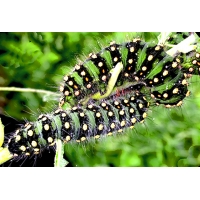
Emperor Moth Saturnia pavonia
Britain’s only Silkmoth. The male and female have similar markings, but the female is larger, and the male is more brightly coloured.
Emergence is in March/April. Pairing is easy – if you have a female, she may attract males from miles away. The Emperor Moth occurs in many rural areas but is particularly found on heaths, where they breed on Heathers. The larvae feed on a variety of plants, including Bramble, Raspberry, Hawthorn, Blackthorn, Apple, Plum, Blackthorn, Oak, Hornbeam, Birch, Heathers and Heaths, Blueberry, Meadowsweet, Wild Rose, Sea Buckthorn, Purple Loosestrife, Willows especially Osier Salix viminalis, Pussy Willow (Sallow).
The caterpillars cluster in the early instars, eventually spreading out and becoming brightly coloured, as beautiful as such exotics as the Moon Moths. The cocoon is spun in the foodplant. An interesting construction with a neck and open end, through which the adult emerges.
Store cocoons in a plastic box in a fridge until March. The moths normally emerge in April.
This is one of the fun species to rear. Demand for this species is high. Please order early.
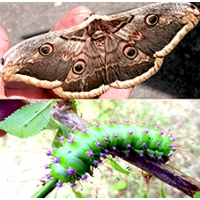
Giant Peacock Moth Saturnia pyri
Magnificent - Europe’s largest moth. Flies in May, pairs easily and lays prodigiously. Exotic looking larvae.
Rear the larvae in warm, dry conditions. They are very easy to rear in the first instars and extra care is needed to bring them through the final instars. They repay proper care, growing fast and changing colour.
The large larva is as handsome as the tropical Saturniidae and has much in common with Moon Moth larvae, but with sapphire blue tubercles. They do well on Blackthorn and Plum and will often feed on other fruit trees and Hawthorn, Willows, Alder and Birch.

Ligurian Emperor Moth Saturnia pavoniella
Ten cocoons normally £28.95 NOW 22.95!
Slightly larger than our Emperor. A joy to breed: with amazingly varied larvae, quite distinct from Emperor larvae.
Although the moth is similar to our Emperor Moth pavonia, pavoniella male has a paler band on the hindwing inner margin. There are other differences in appearance and the intensity of pattern, particularly in the male.
Large larvae are quite distinct from those of pavonia, and very diverse in their colouring (see pictures). Foodplants are the same as for pavonia and include Apple, Plum, Blackthorn, Bramble, Hawthorn, Heather, Willow, Birch, and many others. Pavoniella females pair several times (pavonia only once). The two species hybridise easily but the progeny of hybrids of pavonia with pavoniella are infertile, which indicates that pavoniella is a true species. Pavoniella is found in central Europe, extending south to Greece and for some distance into Turkey and well into Asia Minor.
Pairing is very easy in sunshine. Rearing the larvae is most rewarding and interesting. Do give this species a try!
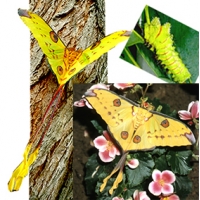
Madagascan Moon Moth Argema mittrei
There is no other species in the world like this beautiful and graceful giant! Mittrei occurs only on the island of Madagascar, and it is a privilege to be able to have this amazing species to breed at home in captivity. If this huge Moon Moth were to decline its loss would equate with the loss of the Dodo. Don't overlook the opportunity to experience Argema mittrei at first hand. It may not always be possible!
Huge netted cocoons of silvery silk – THE biggest cocoon in the world!
Both male and female moths are tailed but those of the male are very extreme. They are a joy to hatch out!
They need daily spraying and a temperature of 25-30 degrees C. Pairing of the adults is notoriously difficult but if successful, the larvae are not difficult to rear on Eucalyptus, Liquidambar or Stags Horn Sumach Rhus typhinus. Hand-pairing has been reported to be successful but we have not tried it.
Mittrei is found only on the island of Madagascar and is quite one of the word's most exceptional moths.

Giant Atlas Moth Attacus atlas
There is a shortage this winter. We are sending out as and when received.
The largest moth in the world. Winter cocoons are dormant. You can choose whether to incubate them or keep them cold until the spring. To get them to emerge, raise the temperature to 15 degrees C, and gradually up to 30 degrees C or more, and very humid. They need very warm and humid tropical conditions. When hot, soak the cocoons at least once or twice daily.
It is probably better to keep them cool (8 -12 degrees C) and dormant until mid-April, or even May, then raise the temperature and humidity as described above. They will respond better to summer conditions.
Pairing is achieved in a cage that is ample for the size of the moths but not so large that they can become too separated.
Larvae feed on Privet Ligustrum and are easily reared in warm and moist conditions. Atlas larvae will also feed on Tree of Heaven Ailanthus, Osier Willow Salix viminalis, Citrus and undoubtedly a number of other substitute plants outside their normal habitat.

Attacus lorquinii - Philippines
This species, endemic to the Philippines, is characterised by the prominent red lines and markings across the wings.
You can choose whether to incubate them or keep them cold until the spring. To get them to emerge, raise the temperature to 15 degrees C, and gradually up to 30 degrees C or more, and very humid. They need very warm and humid tropical conditions. When hot, soak the cocoons at least once or twice daily.
It is probably better to keep them cool (8 -12 degrees C) and dormant until mid-April, or even May, then raise the temperature and humidity as described above. They will respond better to summer conditions.
Pairing is achieved in a cage that is ample for the size of the moths but not so large that they can become too separated.The larvae feed on Privet. They appreciate humidity and a temperature of at least 25 degrees C.

Owl Butterfly Caligo pupae South America
By any standards, these are huge butterflies, with impressive colouring and markings, both on the upperside and with the owl-like underside. The pupae will be unspecified species but will all produce magnificent and breath-taking butterflies.
Owl Butterflies fly at dusk and dawn in particular, so they like low light conditions.
The pupae are massive, pretty well as big as any other in the world. They are naturally formed on Banana trees, which are the foodplant of the larvae, and they resemble the spent and decaying banana fronds around the trunk. Hang the pupae in an emerging cage, out of the sun, but in warm and moist conditions. A greenhouse is ideal. Let the butterflies feed on dishes of rotting fruit and do include banana, which they really love.
Provide warmth and humidity that the pupae normally experience in the tropics and sub tropics. About 30°C is ideal, and humidity above 70%. The butterflies like a warm greenhouse containing nectar plants, and this is the best place also for the emerging cage for the pupae. Shade the cage from direct sun which is too harsh.
It’s a good idea to suspend the pupae. To do this, use a stick or wooden rod held horizontally. Apply a very thin line of contact adhesive eg Evostick along the rod. Lay the rod on a table and, when it is tacky but not yet set hard, touch the tails of the pupae on the line of glue. Warning: excess glue actually kills the pupa, so use just a very thin line. When the glue has set you can pick up the stick, with all the pupae hanging vertically from it.
If you don’t wish to suspend the pupae they can be laid on corrugated card. The surface must remain clean and rough. For hygiene the corrugated card needs to be replaced every few days.
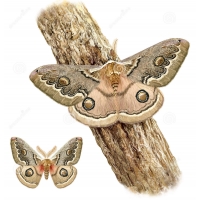
Saturnia (Neoris) schencki Kazakhstan
This is a large silkmoth occurring in Kazakhstan, recorded as a separate species from Neoris huttoni that is normally offered. It is very seldom available and never offered before by WWB! These cocoons are produced from the race in the Almaty region, Altyn Emel, Kazakhstan, altitude 800 meters.
The cocoons will produce moths in late summer or autumn, and lay eggs that overwinter. Only a limited supply available.
Read more about this species in the article by the Saturniid specialists Nässig, Naumann and Löffler by following the link at the bottom of this text.
We have never had this species before. Larvae illustrations are of N. huttoni. as we have never reared schencki whose larvae are reported to look much the same.
The hibernating eggs are simply stored in the refrigerator until buds open in spring.
The larvae like Ash Fraxinus in particular, Pear Pyrus, Plum and probably Cherry Prunus (Prunus padus is particularly successful), Willows Salix, Privet Ligustrum, Stag’s Horn Sumac Rhus thypina, Spirea. [We have had a report of larvae not taking to Privet but we have reared Huttoni on Privet]
The larvae live beneath a leaf and do not like being disturbed. Young larvae go through interesting and different colour forms.
The cocoon is formed in litter on the ground. Moths emerge in autumn and lay overwintering eggs.
Our thanks to Dr. A. Pittaway for kindly letting us show some of his pictures.
See the article by the Saturniid specialists Nässig, Naumann and Löffler by following this link:
https://www.researchgate.net/publication/344163414_Revisional_notes_on_the_subgenera_Saturnia_Perisomena_and_Saturnia_Neoris_stat_rev_Lepidoptera_Saturniidae_-_Part_B_Neoris_with_a_homonymy_correction_note
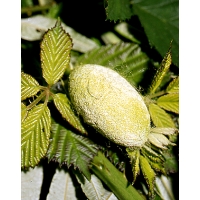
Antheraea yamamai COCOONS Far East and Central Europe
The magnificent GREEN cocoons of this Silkmoth are very difficult to obtain. These come from North Korea. The cocoon of green silk, looking like a green bird’s egg, is spun in summer and the moths do not emerge imediately, but some have just started. The moth is variable in colour, often bright canary yellow, with large ringed eye-spots, one in the centre of each wing. The caterpillar, a close relative of Antheraea pernyi, the Chinese Oak Silkmoth, grows very large and has a green face. Very easy to rear on Oak. Also reported to feed on Beech Fagus, Sweet Chestnut Castanea, Hornbeam Carpinus, Rose, Hawthorn Crataegus, Sallow Salix caprea, Osier Salix viminalis.
Pairings are not difficult - resulting eggs overwinter. They are stored cold until the oak buds burst in the spring. Few breeders get the opportunity to pair the moths of yamamai and produce eggs for next season. Don’t miss this opportunity.

Madagascan Emperor Antherina suraka
Not only is the moth highly colourful and attractive, but the larvae are also most interesting, having an almost infinite number of different colour forms.
The moths pair as easily as pernyi (!) and lay lots of eggs.
The larvae are easy to keep indoor or sleeved out in summer weather, and will take a variety of foodplants. Those reported include Oleander, Privet, Willows, Beech, Liquidambar, Hawthorn, Grapevine, Lilac, Cherry, Laurel, Forcythia, Rhus, Pistachia, Apple, Pear, Plum, Peach and Cabbage.
We highly recommend this species.

American Moon Moth Actias luna North America
A very attractive Moon Moth that emerges from May and breeds exceptionally easily. The larvae feed well on Walnut, Birch, Osier Willow, Liquidambar, Plane, Maples, Aspen, Plum, Sallow, Several kinds of Oak and maybe other foodplants.
A second brood is produced in late summer. Winter is passed in the cocoon stage. Store them cold from November until April. May is the normal emergence time for the first brood.