
Current EGGS and LARVAE
If you are a beginner and need information on rearing from small caterpillars, or hatching out pupae, please order the All Colour Paperback BUTTERFLIES. INSTRUCTIONS ARE NOT SENT WITH EACH SPECIES, you need to acquire basic skills and this book is a simple way of doing so.
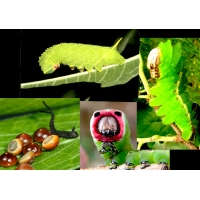
DUOS and TRIOS Pick Your Own. 10 eggs of each species.
Can only be sent to addresses in Britain.
DUOS & TRIOS Select your own. Extra good value! About half normal price. Sometimes a species cannot be supplied at the time. If this happens we will substitute, and you can indicate in brackets an additional species that you would prefer if a substitute becomes necessary. You can choose any combination of species you like from the following:
Lime Hawkmoth tiliae
Tau Emperor tau
Red Underwing nupta
Clifton Nonpareil fraxini
Silkworm Bombyx mori
Yamamai Silkmoth yamamai
Giant Peacock Moth pyri
Eyed Hawkmoth ocellata
Poplar Hawkmoth populi
Tree of Heaven Silkmoth cynthia
Scarlet Tiger Moth dominula
Select DUO or TRIO
On your order enter IN THE COMMENTS BOX your chosen species. To keep it simple follow this example, using the short scientific name: luna, advena, suraka (cynthia). This is an example of a TRIO. The name in brackets is your second choice if one species is sold out.
If you wish to buy more than one of the same combination just increase the quantity. To go on to buy a different combination DUO or TRIO, just click on the Pick Your Own again, on the same order and choose a further combination.
FOODPLANTS
Tiliae : Lime, Elm. Other reported foodplants include Cherry, Alder, Birch, Oak, Hazel, Acer including Sycamore, Sorbus, Apple, Pear and Ash.
Ocellata: Apple, Willows, Poplars, Blackthorn, Lime, Privet, Alder, Birch, Plum, Blackthorn, some Viburnums, Various Prunus, Laurel.
Pavonia Bramble, Raspberry, Hawthorn, Blackthorn, Apple, Plum, Blackthorn, Oak, Hornbeam, Birch, Heathers and Heaths, Blueberry, Meadowsweet, Wild Rose, Sea Buckthorn, Purple Loosestrife, Willows especially Osier Salix viminalis, Pussy Willow (Sallow).
Tau: Birch, Oak, Lime, Hawthorn, Willow, Sallow, Fruit trees.
Nupta: Willows, Sallow, Poplars.
Fraxini: Poplars.
Yamamai: Oaks. Will often accept Hawthorn, Birch, Chestnut, Beech, Hornbeam.
Silkworm: Mulberry.
Pyri: Plum, Hawthorn, Blackthorn, Pear, Osier Willow.
Populi: All Poplars, most Willows. Excellent on Osier Willow.
Cynthia: Privet, Ailanthus, Willows, Osier, Lilac.
Dominula: Comfrey, Sallow, Osier, Dead Nettle,
Luna: Walnut, Liquidambar, Birch, Plane, Maples, Aspen, Plum, Oak, Sallow, Osier Willow, Several kinds of Oak.
Rinaca lindia: Recorded food plants are Birches, Poplars, Walnut, Honeysuckle, Sea Buckthorn, Prunus, Maple, Willows.
Oak Hawk: quercus. Oak, especially Evergreen Oak,
Automeris io: Lime, Oak, Beech, Willows, Sallows, Fruit trees and more.
Vinula: Poplars, Willows, Sallows.
Promethea: Foodplants include Lilac and Cherry, Privet, Ash, Apple, Pear, Oak, Rhododendron, Willow, Lime, Tulip Tree Liriodendron, Peach, possibly Maple, Poplar and even Pine may also be taken
Pernyi: Birch, Sweet Chestnut, Horse Chestnut, Prunus, Hornbeam (Carpinus), Apple, Hawthorn, Beech, Oak, Osier,
Pavoniella: Hawthorn, Blackthorn, Osier Willow, Pussy Willow, Plum, Apple, Bramble,
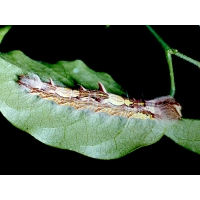
Morpho peleides (helenor) Central and South America
Morpho peleides and helenor are both the same species.
We have seldom been able to list Morpho eggs and larvae before. Morpho larvae will usually eat Calathea, a generally available pot plant in a variety of species. The temperate foodplants tried so far with success are Salix (Willows and Sallows), of which there are a number of species, not all of which will succeed. Our breeder is currently using Willow to rear his larvae. Also False Acacia Robinia pseudacacia, Clover, Laburnum, Peanut and Wisteria. We don't guarantee any of the foodplants, but here is a chance to learn by experience!
Some warmth is required, about 25-30 degrees. The larvae are fast growing. Young larvae have an interesting black ruff around the head. They are highly colourful and patterned in Burgundy and yellow, with decorative tufts of hair.
Pupae are suspended from the tail, like green Christmas baubles.
This is a rare opportunity. Give them a try.

Great Water Dock Rumex hydropathalum Seeds. Foodplant of the Large Copper Butterfly
Seldom available. Sow in autumn or from February. Seed germinates and grows well in Spring, producing plants with broad leaves and often growing to over a metre in height.
In the wild Great Water Dock lives at the water's edge, with its roots continually immersed. If growing in pots, keep them in a tray with no holes, and always filled with water.
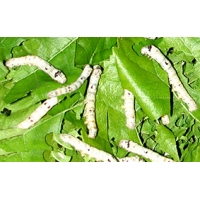
Silkworms Bombyx mori 50 Medium Silkworms
For delivery only to GB addresses as they don't travel long distances well.
Nearer half-grown these are advanced and, according to temperature, will be mature in a couple of weeks. Suitable size for class demonstration.
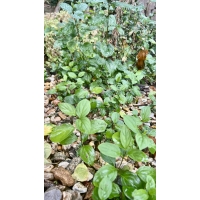
Buckthorn seedlings Rhamnus catharticus
Foodplant of the Brimstone Butterfly Gonepteryx rhamni.
Sent as bare-root seedlings to plant immediately. Grow in pots or planted outside.
Grow these into bushes to feed the larvae and attract Brimstones to where you are.
Supplied in lots of 10 Small, 5 Medium, or 2 Large

Osier Willow cuttings S. viminalis
Years ago we planted a stick that was floating down a river in Wiltshire. That was in 1954! It grew – rapidly – producing a wealth of leaves. We tried it as a foodplant and discovered that not only did British species do well on it, but exotic silkmoth larvae as well.
This stick was the daddy of hosts of willow thickets that we have established in Dorset, Cornwall and in France.
Osier is Basket Willow, the flexible essential for basket weaving. It makes a wonderful woven hedge. It can form living sculptures. Winter or summer, Osier makes wonderful screens and windbreaks. Cover for wildlife and game. Osier is grown as a crop for energy production. In short it is a blessing to the environment, and very pleasant on the eye in landscaping schemes.
We are offering a bunch of 10 cuttings for you to try not only as probably the most universal foodplant for larvae, but a great addition to your garden and grounds.
Probably the easiest cuttings to strike and grow. You simply push them into the ground, during autumn or spring. Leaves will appear within the first fortnight if planted in spring, roots quickly follow. In the first year they will more than double in size. Next year, in normal drought free conditions, if you winter prune very hard, you will have perhaps 2 metres of growth on every branch, providing masses of foodplant. You may even be able to feed some in the first year.
You can store cuttings before planting, either in a polythene bag in the fridge, or standing in water. In water they often start to root. It is advisable to plant them before the roots actually burst out of the bark.
This plant is a complete success story – you will be pleased you tried it!
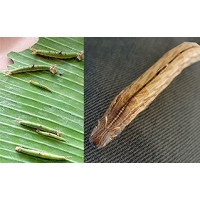
Owl Butterfly Caligo South America
Magnificent and huge butterflies. Usually Caligo memnon or eurylochus. The larvae are fast-growing and eat quite a lot!
The natural food is leaves of the Banana tree, but they have been recorded as accepting leaves of Canna, Calathea, Strelitzia and even Bamboo, but they may not always accept Bamboo, or thrive as well on it.

Large White Butterfly Pieris brassicae
Egg batches vary in size but usually contain 20-30 eggs.
No longer the common butterfly it once was. Winter pupae are stored cool for the winter and normally hatch in May.
This is a good species for the inexperienced, and as an introduction to rearing larvae. Keep larvae protected from parasitic flies.
The larvae feed on cabbage but also most Cruciferae which can be better and less smelly for captive rearing! Horseradish is ideal for its large leaves and other species include Rape, Mustard, Sweet Rocket, Turnip, Nasturtium and Watercress.
There are two or more generations in a year.

KOKUSO 21 Mulberry A rarity! A group of 5 robust cuttings.
This sericultural form of Mulberry has been developed in Asia for its large leaves with high nutrition as food for Silkworms. Not generally available for sale, we are offering a limited number of robust cuttings in groups of 5.

The cuttings will develop roots and leaves if put into a mixture of compost, preferably with manure, and Pearlite, fine grit or Vermiculite. Never let the compost dry. Rooting may be assisted if dipped in hormone rooting powder. Cover the pot with a plastic bag and keep it on bottom heat, in the light, but away from direct sunshine. Mulberry cuttings take longer to root than Willows and Osiers, which are very rapid. Hard winter pruning is repaid with amazing growth, which can reach 1-2 metres on every branch in the following summer.
This is a rare shrub, seldom seen in Northern Europe.
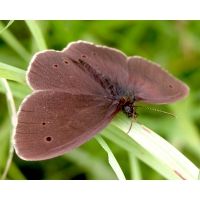
Ringlet Butterfly Aphantopus hyperanthus
A species of meadows, especially damp places. Eggs are laid in July. The larvae hibernate deep in the grasses. In spring they resume feeding. Keep larvae on a good tussock of potted grass, totally enclosed with a size 3 sleeve This is the first time offered by WWB!
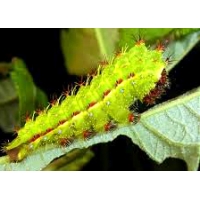
Copaxa witti, Mexico
This is a first time for WWB! Male and female moths distinctly different colour and pattern. Apparently easily reared, the larvae feed on Bay Tree Laurus nobilis, and other Lauraceae, Oaks including evergreen, Willows and Sallows. Very likely other trees as well.
Eggs sent direct to you by our breeder in Europe.
