
Current EGGS and LARVAE
If you are a beginner and need information on rearing from small caterpillars, or hatching out pupae, please order the All Colour Paperback BUTTERFLIES. INSTRUCTIONS ARE NOT SENT WITH EACH SPECIES, you need to acquire basic skills and this book is a simple way of doing so.
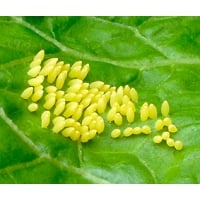
Large White Butterfly Pieris brassicae
Egg batches vary in size but usually contain 20-30 eggs.
No longer the common butterfly it once was. Winter pupae are stored cool for the winter and normally hatch in May.
This is a good species for the inexperienced, and as an introduction to rearing larvae. Keep larvae protected from parasitic flies.
The larvae feed on cabbage but also most Cruciferae which can be better and less smelly for captive rearing! Horseradish is ideal for its large leaves and other species include Rape, Mustard, Sweet Rocket, Turnip, Nasturtium and Watercress.
There are two or more generations in a year.
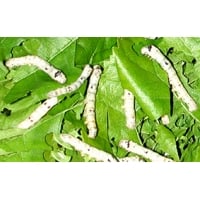
Silkworms Bombyx mori 50 Medium Silkworms
For delivery only to GB addresses as they don't travel long distances well.
Nearer half-grown these are advanced and, according to temperature, will be mature in a couple of weeks. Suitable size for class demonstration.
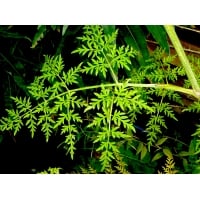
Milk Parsley Peucedanum palustre Packet of seed
The natural foodplant of the English Swallowtail butterfly, in its fenland habitat, and for Papilio machaon machaon, the nominate race in Sweden. This plant encourages egg-laying like no other, and is often the chosen foodplant of the European Papilio machaon gorganus in other parts of Europe,
The leaves look a little like Carrot. This is a marsh plant that likes growing with its roots in water. Potted plants can be stood in a tray that is always full of water. Otherwise grow on the edge of a pond, or create a non-draining habitat around the roots.
Larvae from eggs laid on Milk Parsley can be changed to Fennel or other foodplants, in cases where there is not enough Milk Parsley to raise a host of hungry caterpillars. However, our Swedish breeder tells us that in that country, machaon does much better when fed only on Peucedanum.
Seeds sown in autumn are capable of producing plants large enough for egg-laying in the following summer.
Easily grown from seed, in a tray of peaty compost. Seed does not keep for many weeks, so don't store the seed: sow without delay.
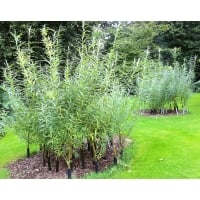
Osier Willow cuttings S. viminalis
Years ago we planted a stick that was floating down a river in Wiltshire. That was in 1954! It grew – rapidly – producing a wealth of leaves. We tried it as a foodplant and discovered that not only did British species do well on it, but exotic silkmoth larvae as well.
This stick was the daddy of hosts of willow thickets that we have established in Dorset, Cornwall and in France.
Osier is Basket Willow, the flexible essential for basket weaving. It makes a wonderful woven hedge. It can form living sculptures. Winter or summer, Osier makes wonderful screens and windbreaks. Cover for wildlife and game. Osier is grown as a crop for energy production. In short it is a blessing to the environment, and very pleasant on the eye in landscaping schemes.
We are offering a bunch of 10 cuttings for you to try not only as probably the most universal foodplant for larvae, but a great addition to your garden and grounds.
Probably the easiest cuttings to strike and grow. You simply push them into the ground, during autumn or spring. Leaves will appear within the first fortnight if planted in spring, roots quickly follow. In the first year they will more than double in size. Next year, in normal drought free conditions, if you winter prune very hard, you will have perhaps 2 metres of growth on every branch, providing masses of foodplant. You may even be able to feed some in the first year.
You can store cuttings before planting, either in a polythene bag in the fridge, or standing in water. In water they often start to root. It is advisable to plant them before the roots actually burst out of the bark.
This plant is a complete success story – you will be pleased you tried it!

OSIGIAN Mulberry cuttings
This Mulberry cultivar is named after Professor Osigian who developed it. Osigian Mulberry became the principal foodplant for the Silkworms for Zoë Lady Hart Dyke at the Lullingstone Silk Farm. Foliage is extremely productive and fast-growing, often producing giant leaves. Growth is stimulated by both winter and summer pruning. Before the Silk Farm was saved by Worldwide Butterflies, the method of propagation was by layering. Now we propagate by taking cuttings which root as easily as Willows! Osigian is not just rare, it is unique to where it has been planted for the Lullingstone Silk Farm. It is not even found in any Mulberry garden anywhere else in the world! We are now offering cuttings for sale, to help spread this cultivar and saving it for posterity.

Great Water Dock Rumex hydropathalum Seeds. Foodplant of the Large Copper Butterfly
Seldom available. Sow in autumn or from February. Seed germinates and grows well in Spring, producing plants with broad leaves and often growing to over a metre in height.
In the wild Great Water Dock lives at the water's edge, with its roots continually immersed. If growing in pots, keep them in a tray with no holes, and always filled with water.
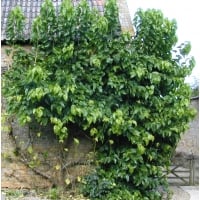
KOKUSO 21 Mulberry A rarity! A group of 5 robust cuttings.
This sericultural form of Mulberry has been developed in Asia for its large leaves with high nutrition as food for Silkworms. Not generally available for sale, we are offering a limited number of robust cuttings in groups of 5.

The cuttings will develop roots and leaves if put into compost, preferably with manure. Never let the compost dry. Rooting may be assisted if dipped in hormone rooting powder. Mulberry cuttings take longer to root than Willows and Osiers, which are very rapid. Hard winter pruning is repaid with amazing growth, which can reach 1-2 metres on every branch in the following summer.
This is a rare shrub, seldom seen in Northern Europe.
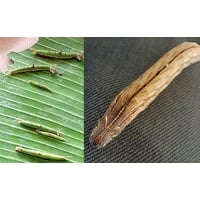
Owl Butterfly Caligo South America
Magnificent and huge butterflies. Usually Caligo memnon or eurylochus. The larvae are fast-growing and eat quite a lot!
The natural food is leaves of the Banana tree, but they have been recorded as accepting leaves of Canna, Calathea, Strelitzia and even Bamboo, but they may not always accept Bamboo, or thrive as well on it.
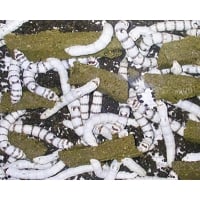
Artificial Mulberry Diet powder for 20 Silkworms
Until now it has not been possible to rear silkworms without their natural foodplant Mulberry. Mulberry is often difficult to find but we are now able to offer a very convenient artificial diet that can be used as a substitute food, in any part of the world and at almost any time of the year, providing you can keep the silkworms at 25-28 degrees C. Eggs supplied in November/December will need to be refrigerated for 8-12 weeks before incubation.
The diet is sent as a sachet of powder that is easily prepared in the kitchen. It comes packeted to give sufficient food for the entire life of the silkworms, enough for 20 Silkworms. The powder can be kept for a year or more in a fridge. Made up diet can be refrigerated and kept for a month or more. Silkworms fed on diet will usually change to leaf if required, but if fed at first on leaf, they will not usually take to the diet. The life of a silkworm kept at the required temperature is about 5 weeks.
Artificial diet takes a lot less time and trouble than rearing on leaf. More importantly this enables rearing when Mulberry cannot be obtained. Eggs supplied in November - January will need to be refrigerated for 8-12 weeks before incubation. Rearing Silkworms is very educational and suitable for schools and families.
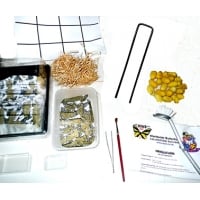
THE MINI SILK FARM
A complete outfit for rearing silkworms from egg to cocoon, and reeling your own raw silk. Everything is provided: a small batch of eggs, food for the entire life of 20 silkworms, all the rearing equipment, detailed educational documentation and instructions, and a simple reeling device.
There is even a small bag of cocoons so that you can practise reeling, and don't have to wait to rear the cocoons from the egg.

Normally Silkworms feed on Mulberry leaves. This is an uncommon tree that is not always readily available, so we are providing a substitute food, which is a powder that comes with the necessary instructions for preparing the artificial diet in the kitchen. You will have a supply of fresh food always available for the silkworms throughout their life of about a month.
The Mini Silk Farm can be bought at any time of the year. The eggs are stored in a fridge until incubation. Although rearing in summer is easier because of temperature, you can rear silkworms almost throughout the year, if you can keep them at about 25º-28ºC. Eggs supplied in winter will need to be refrigerated for 8-12 weeks before incubation.
The instructions guide you through easy rearing, preparation of the artificial diet and the reeling process. The Mini Silk Farm is fun and unusually educational.
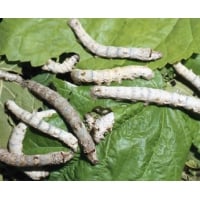
SILKWORM EGGS Bombyx mori WHITE COCOONS
White larvae, producing attractive pure white cocoons. Silkworms require Mulberry leaf, or artificial diet.
Instructions are not sent with the eggs but they are given at the head of the Silk section. Click on silk near the bottom of the Main Menu (top left of the screen)
In winter orders will be booked for supply in the spring. The best rearing season is May to October. Eggs supplied from October onwards are for hatching in the following year. Although there are reports of using other foodplants, the only satisfactory food plant for silkworms is Mulberry. This is sometimes found in the gardens of large houses and old parsonages. Mulberry trees are available from larger nurseries. Any Morus species is suitable: White, Black or any other Mulberry. The larvae eat a lot, so make sure you have a good supply of leaves.
NOW YOU CAN REAR SILKWORMS EVEN IF YOU HAVE NO MULBERRY! There are sachets of artificial diet that you make up in the kitchen. Each sachet is the amount needed to rear 20 silkworms throughout their life.