

|
Worldwide Butterflies has been supplying butterflies and moths for over half a century. There is a range of species available as livestock. Schools can see Recommended School Species. Butterflies and moths are supplied for historic, scientific and identification collections, medical research, for photography and conservation, and even just for their incredible beauty and natural history interest. Read about the History of Worldwide Butterflies HERE. To send a GIFT CERTIFICATE Click here ======================
|
|||||
|
Welcome to the WWB Website ENQUIRING ABOUT AN ORDER? Before you email, please check the Availability showing for the species. Check your Order History for a note on your account. Click on View Item. This should answer your query. If you do enquire, please quote the Order Number AND SPECIES Not just the order number.
If you wish to edit your order, click on Shopping Cart where you can change the quantities or remove an item. It is essential to click the blue circular arrow ikon after making a change on an item, which updates the calculations. Then proceed to Checkout. If your order is not going through at checkout, you are then with PayPal, not on the WWB website, it sometimes helps to try an alternative valid card, otherwise, you can select to pay by PayPal instead of a card. When paying, you are on the payment handler's site, not WWB. if you see a message Authentication required it means that your card is not being accepted. You can try another card. Login to My Account to follow availability of booked items. You can see your order history, Store Credits and check on dispatch. Booked species may have an update note. If none please check the species text on the website to see the current availability.
Have you received the latest WWB NEWS? To receive WWB NEWS by email in future, please go to your Account and click NEWS Subscribe. It's free. You will be notified about current and coming species, special offers and more. Click here to see an example of the WWB NEWS. Most items on the website pages have multiple pictures which show when you click the main picure. If you hover the cursor over a picture, arrows appear left or right so you can scroll through the pictures enlarged. You can click any picture to see it enlarged.
LIVING BUTTERFLIES and MOTHS. For film shoots, weddings and other events we are sometimes asked for butterflies to release. Foreign species cannot be used for this and we don't supply living adults. You can buy pupae but not to a specific date, so you need to organise the synchronisation of emergence for the particular requirement.
Send a GIFT CERTIFICATE To make sure that the recipient gets the greatest benefit, let them choose from the whole WWB website the things they MOST want. This is a wonderful way to mark an event, birthday, anniversary or show appreciation to friends or family, or to encourage a budding interest, even to start a new one. Click here to select one of the pictures to accompany your Gift.
|
Availability: The availability of each species is shown. Orders are booked, and the availability can change. Anything that is immediately available is shown as NOW. If a month or period is shown, and we are at that time, unless the availability is NOW, we must wait until the species is ready to be sent out. As soon as it is, the availability changes to NOW, and dispatch commences. Orders sent internationally are at the risk of the purchaser: When placing an order to be sent internationally, you agree to accept non-arrival, delay or hatching or death of livestock - all risks. We do everything possible to get your order to you safely, by post. Dormant livestock can normally be sent by post, but in hot seasons all livestock is at risk. For European destinations orders can be sent by courier, and arrive in only a few days after dispatch. If this is not shown as the means of sending and you wish to order Express courier, please select Express European courier (XXP) from the main menu. Click on XXP and add this to your order. We cannot send by courier to USA, AUS,NZ, S. Africa and most other countries outside Europe. Even though Express courier costs considerably more: it does not guarantee safe arrival, but usually ensures prompt delivery in fresh condition and perfect health. Time in the Post: Ordered items may come from several different sources, breeders, publishers, manufacturers in different places, even from another country. Most orders are sent by post and arrive with your letters. There is no tracking. Please remember that each species has its season, and allow for this, also for the possibility of your order being posted internationally, which can take a week or two to arrive. Orders for European destinations may be sent by Express courier, once the species is available, if it is obligatory because the species develops quickly, or because it is specifically requested. Generally Express courier takes 1-3 days and is the best way to send livestock that requires special handling, however this is not guaranteed and both mail and courier service is sometimes extended, outside anybody's control.
Orders can be seen on your account Order History. Enquiries about how long delivery will take will not be replied to because the delivery time in the post is inconsistent, and not in anyone's control. Most orders are arriving in good time and good condition. PLEASE BE PATIENT! Thank you.
|
||||
|
|
|||||
|
|||||
|
LIVESTOCK If you are a beginner and need information on rearing from small caterpillars, or hatching out pupae, please order the book shown above. INSTRUCTIONS ARE NOT SENT WITH EACH SPECIES, you need to acquire basic skills and this book is a simple way to learn them.
Newly hatched or small larvae are too small to be put into a cage or aquarium. If you can put them on growing foodplant, protected with a sleeve, that is ideal. Alternatively keep in a plastic box, lined with absorbent paper, in close confinement with fresh foodplant, and changed daily. Fuller hints on the page for Plastic Rearing Containers. For illustrated instructios see the All Colour Paperback BUTTERFLIES. |
LIVESTOCK ON THE WWB WEBSITE is very wide-ranging. Please scroll down the different sections. There are some very interesting species for the connoisseur and for the beginner. AWAY DATES ON YOUR ACCOUNT please enter dates when you cannot receive livestock. Letting us know by any other means will not apply the dates to the system and will not prevent dispatch of orders when you cannot receive them.
NEWS and UPDATES Just go to My Account and click to receive these.
|
||||
|
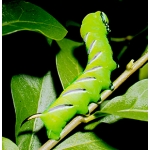
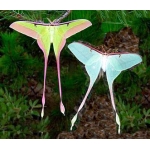
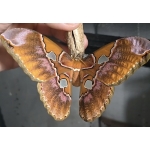
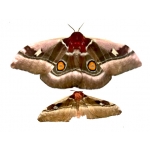
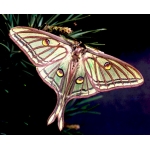
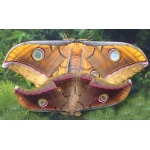
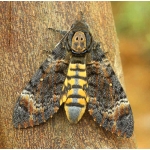
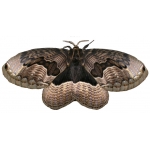
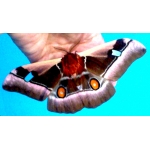
RECOMMENDATIONS Breeding stock of 5 or 10 pupae: If the species breeds easily, or you are experienced and if both sexes emerge at about the same time, 5 pupae may well be enough to give you a pairing and fertile eggs. With TEN pupae, the chances of breeding success are considerably improved. Classic species. The WWB website has a very wide range of species from all over the world, including Deathshead Hawkmoth, Swallowtails, wonderful Exotic Butterfly Pupae, tropical giants such as the Atlas Moths and a variety of amazing Moon Moths. The anticipated season for availability is shown for each one.
PLEASE SEE FEATURED SPECIES AND CURRENT LIVESTOCK
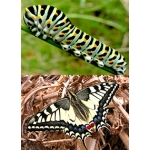
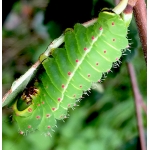
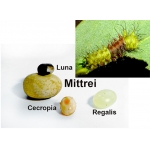
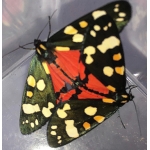
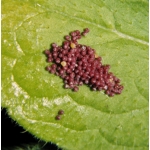
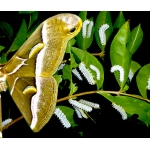
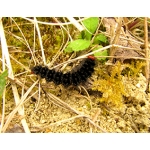
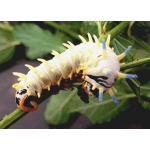
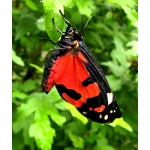
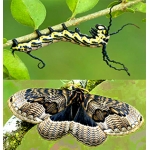
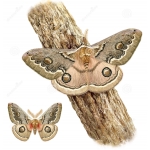
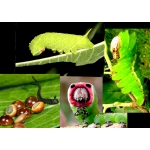
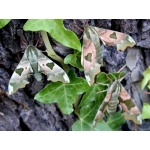
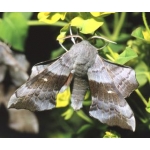
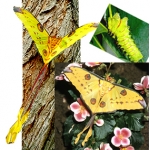
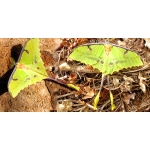
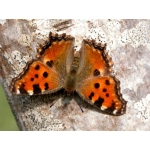
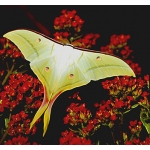
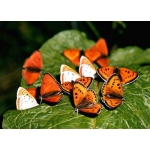
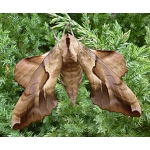
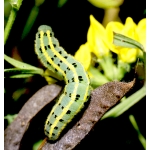
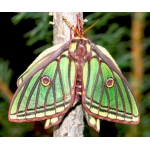
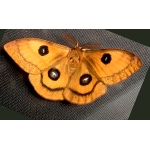
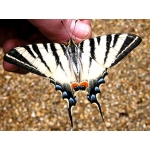
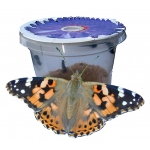
SWALLOWTAILS Papilio machaon gorganus are now laying well. We can take more orders now. THE MADAGASCAN MOON MOTH Argema mittrei is one of the largest moths in the world. Its silvery netted cocoon is spectacular and larger than any othe in the world, and the eggs are by far the largest - several times the size of other Moon Moths. Successful breeding enables us to offer mittrei eggs right now at SPECIAL PRICES. SPANISH MOON MOTH Graëllsia isabellae eggs are being laid right now. This rarity is arguably the most magnificent European moth. Only available once a year in May/June. Orders are already with our breeder in Spain and being sent out. The season is short, but eggs are still available. LARGE TORTOISESHELL polychloros pupae are immediately available THIS WEEK. They only come once a year, and this is a star opportunity! Painted Lady larvae are available right now. This is the season for breeding Hawkmoths. Lime tiliae, Eyed ocellata and Poplar populi are all laying right now. See also PICK YOUR OWN for eggs at about half price. This year Scarlet Tigers dominula are doing very well indeed. They are pupae at the moment. The brilliant red and black day-flying moths will start to breed this month and we are making special offers of eggs in larger quantities. Females scatter their eggs loose whilst in flight. The larvae live in colonies, particularly where Comfrey grows on river banks and waysides. You could start a colony in your area. The Ligurian Emperor Moth pavoniella has moths very like our Emperor pavonia, but the larvae are very varied indeed in their colouring and pattern. Larvae are not available every year, but there are some right now. Also larvae of the Tau Emperor, which have branched spines and look like the Hickory Horned Devils of South America.
THERE ARE STAR CLASSIC and RARE SPECIES that are particularly rare and desirable. These include the Purple Emperors and Swallowtails.
SEE EXOTIC BUTTERFLY PUPAE A range of very attractive species for flight area, conservatory or the new FREEDOM CAGES.
SEE MARKET STALL Section for a list of SPECIAL OFFERS whilst stocks last!
Announcing the new Goodden GemLight SUPER!
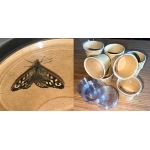
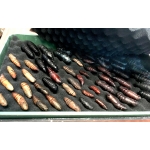
The Goodden GEMLIGHT SUPER is a leap forward in technology, greatly advanced on its predecessor the Goodden GemLight. The new light is more powerful, and has three different emitters, Blue, Green and Ultraviolet, all the most attractive to insects. The combination is a greater attractant than UV alone. No batteries to charge and replace: simply plug into a powerbank. The GemLight Super enables serious moth trapping in remote areas without weighty batteries, cables, a generator or mains supply. Click HERE to see more. ================ CURRENT LIVESTOCK to see all that is available, and keep checking back. Please visit the WWB website regularly, to see all the other species new to our lists, as they appear CURRENT PUPAE include a number of rarer Hawkmoth species of interest to the Sphingid connoisseur. SEEDS of two rare foodplants are available right now. Milk Parsley Peucedanum palustre is the preferred foodplant of the Swallowtail Butterfly Papilio machaon. Sow the seed immediately and it germinates with vigour. The seed does not store for long. Also available now is seed of Great Water Dock Rumex hydropathalum, the preferred foodplant of the Large Copper Butterfly Lycaena dispar. ============= For GIFT SUGGESTIONS please click on that section in the menu top left of the Home Page, or click here. For some years two favourite Silkmoths that were once always available, have become very scarce in captivity. The Indian Moon Moth Actias selene has almost completely disappeared in captive breeding, but eggs will again be available in the coming season. The Chinese Oak Silkmoth Antheraea pernyi has become week and inbred in captivity, but now we have wild silk cocoons direct from China. Cocoons are available immediately, and eggs can be booked for supply from May onwards. SEE CURRENT LIVESTOCK for other eggs and larvae that are available NOW. Worldwide Butterflies NEWS keeps you informed of current livestock changes and availability, and often includes special offers and promotions. PUPAE NEST: At this time, with the new season ahead, it is a good opportunity to set up a practical emerging cage. WWB has devised the PUPAE NEST, which is the most successful way of keeping pupae moist, safe and able to be examined whenever required. The Pupae Nest is suitable for all pupae, but is particularly ideal for pupae that live on or under the ground. Pupae are arranged in depressions in specially formed foam sheets, which keeps the pupae separate, moist, and in hygienic conditions. Please see the Pupae Nest in the section for Plastic Rearing Containers. For the Field Naturalist there is the new Spring Frame Pocket Net. Please see this in the Equipment section of this website. The design is practical, construction rugged, and the net fits nicely in the pocket, but can be deployed in seconds when required. This keeps both hands free for examination and photography, when the net is not in current use. Osier Willow S. viminalis. Years ago we planted a stick that was floating down a river in Wiltshire. That was in 1954! It grew - rapidly - producing a wealth of leaves. We tried it as a foodplant and discovered that not only did British species do well on it, but exotic silkmoth larvae as well. An amazing foodplant that grows prodigeously, looks most attractive grown formally in a garden, or in a wild setting. Moonlander Moth Trap and Goodden GemLight. No other trap is so compact and lightweight for travel. The only ultra compact trap and light for travel and sampling insects in remote habitats. Rearing Cages There are cages for travel, small ones for starters, Giant for larger breeding programmes and the range of Pyjama Cages in three sizes. Pyjama Cages are practical in use and one of the most important features is that, a used cage can be renovated to almost new state in only a few minutes. No need to replace netting that is worn or dirty, simply by removing the entire netting cover and replacing with a new or freshly washed one. Sleeves. Sleeving is the most natural method for rearing larvae, proving constantly fresh food, with protection from parasites and predators, and preventing escape. The WWB sleeves uniquely have zip access which is a great convenience and time-saver. Five sizes from small to giant. This RECOMMENDED section is constantly evolving. Please keep visiting the WWB website to see more, and all the other changes and additions. |
|||||
| W | |||||


Worldwide Butterflies - over 50 years of supplying butterflies, moths, livestock, and entomological equipment






|
IMPORTANT NOTES Livestock orders not able to be supplied are carried over for priority supply the next season. Please inform us if you wish to cancel and be credited or refunded. Livestock sent to UK addresses will be replaced or credited if it arrives dead and is reported within 2 days. Not if it dies subsequently or is reported later. Orders are sent internationally only at the buyer's risk. |
Please note that all prices are subject to carriage charges and 20% VAT (except books and orders from non-EU countries), which will be added to your order at the checkout. Livestock sent outside the UK, whilst we do our best to see that it arrives safely, is sent at the BUYER'S RISK. Livestock to Mediterranean countries is often subject to delay and hot climate. Please do not order eggs/larvae, nor pupae that are not dormant, to be sent where it is hot. Livestock sent to USA need USDA permits. We cannot send to AUS or NZ, unless government authorised.
WWB email: [email protected] |