
MARKET STALL Everything a BARGAIN!
Small numbers only. First come first served!
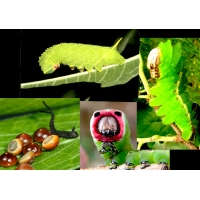
DUOS and TRIOS Pick Your Own. 10 eggs of each species.
Can only be sent to addresses in Britain.
DUOS & TRIOS Select your own. Extra good value! About half normal price. Sometimes a species cannot be supplied at the time. If this happens we will substitute, and you can indicate in brackets an additional species that you would prefer if a substitute becomes necessary. You can choose any combination of species you like from the following:
American Moon Moth luna
Indian Moon Moth selene
Red Underwing nupta
Silkworm Bombyx mori
Poplar Hawkmoth populi
Tree of Heaven Silkmoth cynthia
Select DUO or TRIO
On your order enter IN THE COMMENTS BOX your chosen species. To keep it simple follow this example, using the short scientific name: luna, advena, suraka (cynthia). This is an example of a TRIO. The name in brackets is your second choice if one species is sold out.
If you wish to buy more than one of the same combination just increase the quantity. To go on to buy a different combination DUO or TRIO, just click on the Pick Your Own again, on the same order and choose a further combination.
FOODPLANTS
Luna: WALNUT, Birch, Willows and Sallows, Oaks,
Selene: Hawthorn, Plum, Apple, Walnut, Willows, more are listed on the WWB website.
Nupta: Willows, Sallow, Poplars.
Fraxini: Poplars.
Silkworm: Mulberry.
Populi: All Poplars, most Willows. Excellent on Osier Willow.
Cynthia: Privet, Ailanthus, Willows, Osier, Lilac.
Ocellata: Apple, Willows, Poplars, Blackthorn, Lime, Privet, Alder, Birch, Plum, Blackthorn, some Viburnums, Various Prunus, Laurel.
Yamamai: Oaks. Will often accept Hawthorn, Birch, Chestnut, Beech, Hornbeam.
Dominula: Comfrey, Sallow, Osier, Dead Nettle,
Tiliae : Lime, Elm. Other reported foodplants include Cherry, Alder, Birch, Oak, Hazel, Acer including Sycamore, Sorbus, Apple, Pear and Ash.
Tau: Birch, Oak, Lime, Hawthorn, Willow, Sallow, Fruit trees.
Pyri: Plum, Hawthorn, Blackthorn, Pear, Osier Willow.
Luna: Walnut, Liquidambar, Birch, Plane, Maples, Aspen, Plum, Oak, Sallow, Osier Willow, Several kinds of Oak.
Rinaca lindia: Recorded food plants are Birches, Poplars, Walnut, Honeysuckle, Sea Buckthorn, Prunus, Maple, Willows.
Oak Hawk: quercus. Oak, especially Evergreen Oak,
Automeris io: Lime, Oak, Beech, Willows, Sallows, Fruit trees and more.
Vinula: Poplars, Willows, Sallows.
Promethea: Foodplants include Lilac and Cherry, Privet, Ash, Apple, Pear, Oak, Rhododendron, Willow, Lime, Tulip Tree Liriodendron, Peach, possibly Maple, Poplar and even Pine may also be taken
Pernyi: Birch, Sweet Chestnut, Horse Chestnut, Prunus, Hornbeam (Carpinus), Apple, Hawthorn, Beech, Oak, Osier,
Pavoniella: Hawthorn, Blackthorn, Osier Willow, Pussy Willow, Plum, Apple, Bramble,
Pavonia Bramble, Raspberry, Hawthorn, Blackthorn, Apple, Plum, Blackthorn, Oak, Hornbeam, Birch, Heathers and Heaths, Blueberry, Meadowsweet, Wild Rose, Sea Buckthorn, Purple Loosestrife, Willows especially Osier Salix viminalis, Pussy Willow (Sallow)

Pure Silk hanks These are English reeled 20/22 Denier raw silk hanks produced at the Lullingstone Silk Farm and Worldwide Butterflies.
These fine silk hanks were reeled on the same hand reeling machine, the only one in
The size and weight not standard but the illustration shows a hank picked at random. This is a unique product!
Special temporary promotion price.

New Design LARVAE FORCEPS
High quality stainless steel. Ideal for moving leaf particles and stems with larvae attached, while changing rearing boxes. These are new to the WWB range. They have a smooth and positive feel, and an excellent grip.

Osier Willow cuttings S. viminalis
Years ago we planted a stick that was floating down a river in Wiltshire. That was in 1954! It grew – rapidly – producing a wealth of leaves. We tried it as a foodplant and discovered that not only did British species do well on it, but exotic silkmoth larvae as well.
This stick was the daddy of hosts of willow thickets that we have established in Dorset, Cornwall and in France.
Osier is Basket Willow, the flexible essential for basket weaving. It makes a wonderful woven hedge. It can form living sculptures. Winter or summer, Osier makes wonderful screens and windbreaks. Cover for wildlife and game. Osier is grown as a crop for energy production. In short it is a blessing to the environment, and very pleasant on the eye in landscaping schemes.
We are offering a bunch of 10 cuttings for you to try not only as probably the most universal foodplant for larvae, but a great addition to your garden and grounds.
Probably the easiest cuttings to strike and grow. You simply push them into the ground, during autumn or spring. Leaves will appear within the first fortnight if planted in spring, roots quickly follow. In the first year they will more than double in size. Next year, in normal drought free conditions, if you winter prune very hard, you will have perhaps 2 metres of growth on every branch, providing masses of foodplant. You may even be able to feed some in the first year.
You can store cuttings before planting, either in a polythene bag in the fridge, or standing in water. In water they often start to root. It is advisable to plant them before the roots actually burst out of the bark.
This plant is a complete success story – you will be pleased you tried it!

NETTING Fine black/grey Nylon 10 metres 120cm wide
If you are thinking of making a netting structure, cage covering and replacement or making sleeves for rearing larvae, this is the ideal netting.
Durable, resists tearing and deterioration in UV light. It is fine enough to keep out all but the minutest flies and parasites.

NEW Zipped Bag Sleeve with side opening for instant access.
This size is ideal for rearing to pupation about ten larvae, or for keeping larger numbers of younger larvae. The end of the bag is sewn closed. The open end is slipped over a branch and tied or fastened with velcro strip.
The side zip gives wide access for inspection, photography or removal of frass and any dead leaves. Also ideal when you find that a caterpillar has hitched a lift on your arm! When you use a Zipped Bag Sleeve you will wonder why it has taken until now to use such an innovation!

NETTING Fine black/grey Nylon 20 metres (2 x 10m) 120cm wide.
Ideal for large structures, flight areas etc.
Use for cage covering or making sleeves for rearing larvae.
Durable, resists tearing and deterioration in UV light. It is fine enough to keep out all but the minutest flies and parasites.

Black Swallowtail Papilio polyxenes asterias North America
Very closely related to the European and British swallowtails, asterias will often hybridise with either, producing interesting offspring.
The collections of 4 pupae comprise 3 male and a female pupa for breeding.
The larvae feed on Fennel, Carrot tops, and some other Umbelliferae including wild and probably cultivated Parsnip. Two broods are produced in the year and the pupae of the second brood hibernate.

Tiger Swallowtail Papilio glaucus North America
The Tiger Swallowtail is perhaps North America’s grandest swallowtail. As a curiosity, a small proportion of females emerge as melanics, not as beautiful as the typical female, but different! They can be bred in captivity and the larvae are as exotic as many of the tropical swallowtails, with the Papilio eye markings and bird dropping camouflage in the early instars.
Try feeding them on Cherry, Ash or Lime, and they will probably take a wider variety of foodplants.

Eastern Festoon Allancastria cerisyi
Found in Eastern Europe into Asia Minor. This group finds itself between the Apollos and Swallowtails. The larvae feed on local Aristolochia species and will normally take Birthwort A. clematitis.
Becoming harder to obtain, these pupae overwinter in a cold place and will emerge usually in May when brought out to emerge.
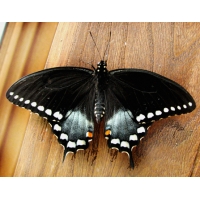
Spicebush Swallowtail Papilio troilus North America
A large swallowtail from the Eastern parts of North America. The larvae, which have wonderful enlarged eye markings, feed on Spicebush Lindera benzoin and Sassafras Sassafras albidum, Camphor Cinnamomum camphora, and Redbay Persea borbonia, perhaps prickly ash Zanthoxylum americanum. In Europe they are bred on Tulip Tree Liriodendron and Sweetbay Magnolia virginiana. There are two generations. Store winter pupae refrigerated in a plastic box, until May.
On the back of the thorax on the pupa, there is a curious pattern in the exact image of a butterfly, even with curly antennae!

Pyjama Mini Cage 22 x 29 x 25cm high
This popular cage has just got even better. Nearly a third larger, and much improved dimensions.
Ideal as a beginner's cage, but also for the busy breeder who wants separate small cages. Excellent as an emerging cage for chrysalides and cocoons, ideal for keeping small numbers of larvae or other insects, when large enough for cage rearing.
This cage is suitable for laying out small numbers of pupae to emerge. Also for rearing smaller numbers of larvae or smaller larvae. Baby larvae should be first reared in plastic rearing containers or kept covered on growing food. Please see the note on the page for plastic rearing containers. This cage will hold small covered pots of plant, and larger sizes of cage are available for larger subjects.
When necessary the netting cover can be slipped off for cleaning or replacement. The Pyjama Mini cage is assembled in minutes and easily packed flat for winter storage. As the interest grows there are larger sizes available. For the experienced breeder the Mini Cage has many uses where a series of smaller cages is needed for separating species and giving different treatment.
The cover can be washed by hand or machine, making your used cage like new for almost no effort, and no cost.