
GIFT SUGGESTIONS
Sometimes it is difficult to know what to give somebody that will be their particular interest. If you give a Gift Certificate then the recipient of your gift can choose things that particularly appeal. Click here for details.

Moths of the British Isles. Colour Identification Guide Bernard Skinner
One of the best works on British Moths, compact text and cross-references simplify identification. Third revised and updated edition April 2009..
A colour identification with 42 plates, illustrating over 1600 species.
Current assessment of breeding species and genuine migrants, their status, habits and distribution. Hardcover. 325 pages. 9.5 x 7.5"
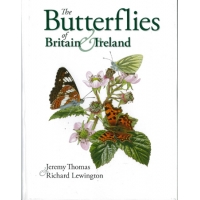
Butterflies of Britain and Ireland Jeremy Thomas and Richard Lewington
Full of stunning illustrations, this new fully revised edition contains updated information about each species in the light of new research and updated maps.
All life stages are illustrated, and aspects of identification, variation, distribution, life-cycle, ecology, food plants and behaviour are all covered. A masterpiece!
Paperback 288 pages.
The Aurelian Legacy Michael Salmon, Peter Marren & Basil Harley
A fascinating account of men and women who have made valuable contributions to our knowledge of British butterflies and of their early and often complex history.
From 1553 to present day, it covers brief biographies of 101 lepidopterists, species of historical interest, nostalgic illustrations of old equipment, good colour plates & text figures. Highly recommended.
430 pages, 11 x 8.5"

Breeding the British Butterflies Peter Cribb
A good practical handbook covering all aspects of butterfly breeding, including general techniques, equipment, and hints on how to breed each of the British species, foodplants, hand-pairing etc. written by an expert on British Butterflies.
60 pages, 6 figures, 5 plates. Paperback 8.25 x 5.75"

Field Guide to the MOTHS of Great Britain and Ireland Paul Waring & Martin Townsend. Illustrated by Richard Lewington
To identify your catch this book is the first ever to depict every species as you find it in the wild, in completely natural positions, instead of wings spread as in a collection. Absolutely outstanding. More than 1,600 superbly detailed illustrations of over 880 species, showing moths in their natural resting positions.
Photographs of larvae. Comprehensive tests for each species, and general introduction to identifying and studying moths. A superb companion to accompany WWB's Moonlander Moth Traps. Quite the best moth book available.
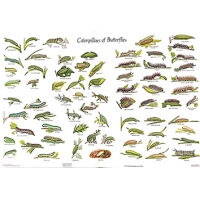
CHART Caterpillars of the British Butterflies
A very striking and informative identification guide, which will help at a glance to identify butterfly caterpillars. The artist is Gordon Riley, and it is edited by David Carter. 20 x 30". Sent folded.

Field Guide to the Micro Moths of Great Britain and Ireland edited by Phil Sterling and Mark Parsons, illustrated by Richard Lewington.
A new guide to micro-moths, illustrated with over 1500 artworks and photographs. Soft cover, 416 pages
Written by a team of experts from across the British Isles, the book describes and illustrates over 1000 species of micro-moths.

Day-flying Moths, a laminated fold-out chart Illustrated by Richard Lewington
8-page laminated chart with 103 species of day-flying macro-moths and information on the habitats and distribution of each species. Illustrations by Richard Lewington.
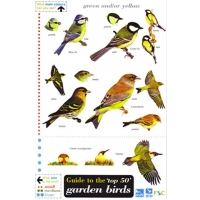
The top 50 Garden Birds in Britain
This laminated fold-out chart is designed to help identify the majority of species likely to be found in a garden throughout the year. 12 pages.

World Collection of Exotic Butterflies
From several world regions and families. Un-identified, selected for beauty and interest. The pupae alone are things of great beauty and interest. One of the real joys of nature!
Choose between the STANDARD World Collection and the DE LUXE World Collection. Both are varied and interesting. The DE LUXE includes such beauties as the shimmering blue Morpho, Giant Owl Butterflies, Larger exotic Swallowtails, Iridescent blue banded Prepona and the like. The pupae are usually larger and some very intricate. Well worth the difference in price. Some species develop in the pupa quite fast, which is why for international orders it is essential to send by courier, though this does not guarantee safe arrival, particularly in summer and to hot countries. in cooler months pupae usually arrive safely.
Illustrations are representative: yours may not be these species as there are so many to choose from - good value is always assured. When possible 10 different species will be sent though this is not always possible.
IMPORTANT - Please read this guide to hatching of exotic butterfly pupae:
Provide warmth and humidity that the pupae normally experience in the tropics. About 30°C is ideal, and humidity above 70%. The butterflies like a warm greenhouse containing varied plants, especially those producing nectar flowers to feed from, and this is the best place also for the emerging cage for the pupae. Examples of nectar flowers include Ixora, Buddleia, Pentas, Eupatorum, Clerodendrum and most Asteraceae (formerly Compositae). Shade the cage from direct sun, which is too harsh. If you don’t have such an environment, you may be able to simulate a warm and humid atmosphere in another way, but don’t apply direct heat. The whole cage needs to be in an even temperature and humidity, which is best provided in a tropical greenhouse environment. It is usually beneficial to mist the pupae at least once a day. It is normal in nature for night to be cooler than day.
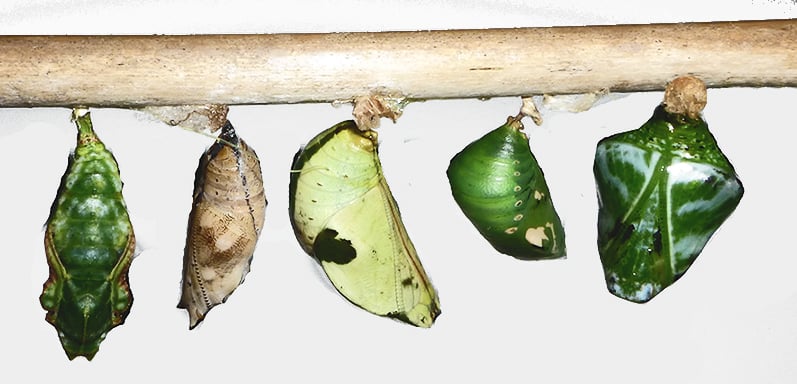
It’s a good idea to suspend the pupae. To do this, use a cane held horizontally. Apply a very thin line of contact adhesive eg Evostick along the cane. Lay the cane on a table and, when it is tacky but not yet set hard, touch the tails of the pupae on the line of glue. Warning: excess glue actually kills the pupa, so use just a very thin line. When the glue has set you can pick up the cane, with all the pupae hanging by their tails from it.
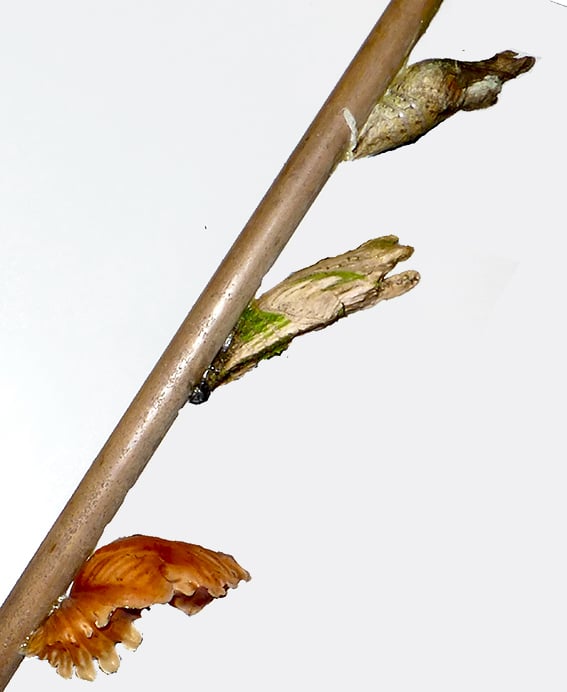
Pupae of the Swallowtail and Pierid families don’t hang from the tail (cremaster), head downwards. They are attached to a twig at the tail, and they use a silk sling around the wing cases to anchor themselves, head upwards and at an angle away from the twig. To simulate this, you can take some lengths of cane. Make a thin line of glue as described above. Lay the cane on a table, then attach the tails of the pupae to the glue line, and touch the abdomen also against the glue line. Once dry, the cane can be arranged standing at an angle against the sides of the emerging cage, or you can arrange them stuck into a block of florist’s foam. There needs to be enough space to allow the emerging butterflies to climb up, expand and dry their wings.
Usually fixing the pupae to a cane helps to give hatching butterflies the best foothold. When fixed to canes pupae are very exposed and can easily dry out. Mist them several times a day. If you don’t wish to glue the pupae to a cane, they can be laid out on corrugated card or other rough surfaces, such as greengrocer’s imitation grass mats or coconut matting, flat on the bottom of the emerging cage. This material may help to keep the pupae moist if you spray them at least once a day. For hygiene the material needs to be cleaned or replaced every few days.
Resulting butterflies do well in a tropical greenhouse, planted with lush greenery and copious nectar-bearing flowers. Some species like to feed from over-ripe fruit. They may live 2-4 weeks in such conditions, exceptionally they can live longer. Kept in a cage in a house, their life may be just a few days, but sometimes longer if they are given fresh nectar flowers each day, and misted to prevent the atmosphere becoming too dry. Non-native butterflies must not be released.

Caterpillars of the British Isles, Colour Identification Guide. Jim Porter
Illustrates 850 butterfly and moth larvae.
Books for identifying caterpillars are very scarce. This excellent caterpillar guide is now available again. Foodplants, Habits etc. detailed for each species.
Compliments Skinner’s Moths. Hardback 275 pages.
The best guide for many years.
World Collection of Exotic Butterflies DELUXE SELECTION of FIFTY pupae
WIDE VARIETY OF SUPERP SPECIES for a special price!
From several world regions and families. Un-identified, selected for beauty and interest. The pupae alone are things of great beauty and interest. One of the real joys of nature!
The DE LUXE includes such beauties as the Larger exotic Swallowtails, Iridescent blue banded Prepona, Ornate Lacewing Butterflies, and the like. The pupae are usually larger and some very intricate. Well worth the difference in price. Some species develop in the pupa quite fast, which is why for international orders it is essential to send by courier, though this does not guarantee safe arrival, particularly in summer and to hot countries. in cooler months pupae usually arrive safely.
Illustrations are representative: yours may not be these species as there are so many to choose from - good value is always assured. When possible 10 different species will be sent though this is not always possible.
IMPORTANT - Please read this guide to hatching of exotic butterfly pupae:
Provide warmth and humidity that the pupae normally experience in the tropics. About 30°C is ideal, and humidity above 70%. The butterflies like a warm greenhouse containing varied plants, especially those producing nectar flowers to feed from, and this is the best place also for the emerging cage for the pupae. Examples of nectar flowers include Ixora, Buddleia, Pentas, Eupatorum, Clerodendrum and most Asteraceae (formerly Compositae). Shade the cage from direct sun, which is too harsh. If you don’t have such an environment, you may be able to simulate a warm and humid atmosphere in another way, but don’t apply direct heat. The whole cage needs to be in an even temperature and humidity, which is best provided in a tropical greenhouse environment. It is usually beneficial to mist the pupae at least once a day. It is normal in nature for night to be cooler than day.
It’s a good idea to suspend the pupae. To do this, use a cane held horizontally. Apply a very thin line of contact adhesive eg Evostick along the cane. Lay the cane on a table and, when it is tacky but not yet set hard, touch the tails of the pupae on the line of glue. Warning: excess glue actually kills the pupa, so use just a very thin line. When the glue has set you can pick up the cane, with all the pupae hanging by their tails from it.
Pupae of the Swallowtail and Pierid families don’t hang from the tail (cremaster), head downwards. They are attached to a twig at the tail, and they use a silk sling around the wing cases to anchor themselves, head upwards and at an angle away from the twig. To simulate this, you can take some lengths of cane. Make a thin line of glue as described above. Lay the cane on a table, then attach the tails of the pupae to the glue line, and touch the abdomen also against the glue line. Once dry, the cane can be arranged standing at an angle against the sides of the emerging cage, or you can arrange them stuck into a block of florist’s foam. There needs to be enough space to allow the emerging butterflies to climb up, expand and dry their wings.
Usually fixing the pupae to a cane helps to give hatching butterflies the best foothold. When fixed to canes pupae are very exposed and can easily dry out. Mist them several times a day. If you don’t wish to glue the pupae to a cane, they can be laid out on corrugated card or other rough surfaces, such as greengrocer’s imitation grass mats or coconut matting, flat on the bottom of the emerging cage. This material may help to keep the pupae moist if you spray them at least once a day. For hygiene the material needs to be cleaned or replaced every few days.
Resulting butterflies do well in a tropical greenhouse, planted with lush greenery and copious nectar-bearing flowers. Some species like to feed from over-ripe fruit. They may live 2-4 weeks in such conditions, exceptionally they can live longer. Kept in a cage in a house, their life may be just a few days, but sometimes longer if they are given fresh nectar flowers each day, and misted to prevent the atmosphere becoming too dry. Non-native butterflies must not be released.