
Current EGGS and LARVAE
If you are a beginner and need information on rearing from small caterpillars, or hatching out pupae, please order the All Colour Paperback BUTTERFLIES. INSTRUCTIONS ARE NOT SENT WITH EACH SPECIES, you need to acquire basic skills and this book is a simple way of doing so.

Eri Silkmoth Philosamia cynthia ricini
A very attractive form with dark banded moths. Very easy indeed to breed in captivity.
The larvae feed on Privet, and are very easy to rear in all seasons. Other evergreen foodplants accepted include Portuguese Laurel Prunus lusitanica, which they relish, Rhododendron, Laurel, and Golden-spotted Laurel Acuba.
Deciduous foodplants: Tree of Heaven Ailanthus is quite their favourite food. They also thrive on Willows, especially Osier Salix viminalis, Cherry, Laburnham, Lilac, Rose, Plum, Apple, Ash, Birch, Elder and doubtless many more.
The larvae are gregarious when young, yellow and black. Larger larvae are covered with white waxy powder. This subspecies is continuously brooded and can be kept going in all seasons. The cocoon is white and can be used to produce spun silk.
-200x200.jpg "Forbes’ Atlas Moth Rothschildia forbesi (R. lebeau). Central America 15 eggs")
Forbes’ Atlas Moth Rothschildia forbesi (R. lebeau).
The Rothschildia species occur in the New World only. They are attractive in all stages and easy to rear.
The larvae of forbesi (also known as lebeau) change from striped yellow and black to green, with a strong lateral line separating the underside which is paler green and downy. They are easy to rear on Privet and fast growing in warmer temperatures.
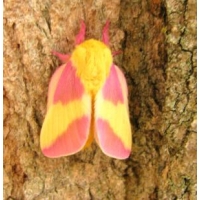
Rosy Maple Silkmoth (Sycamore Silkmoth) Dryocampa rubicunda North America
Eggs are offered subject to successful breeding. It's difficult to get enough moths of both sexes at any one time, but we have a breeding stock and will do everything we can to succeed.
This small Silkmoth, highly colourful, is very seldom available. The larvae feed on Sycamore and Maples, Oaks (reportedly less successful) and Beech. Gregarious at first, they disperse later in life. Pupation is on the ground amongst leaf litter. The pupae emerge in summer, adults pair relatively easily. A highly attractive species, easily bred and highly recommended. Give this unusual species a try.

Robin Moth Hyalophora cecropia North America
This is a magnificent species with most decorative larvae that are easy to rear, especially when sleeved. The moth will sit on your finger fanning its wings, like a pet! Highly recommended.
Cecropia is famous and has now become very difficult to obtain.
A magnificent and very large moth, coloured with scarlet and charcoal. The larvae are most attractive and easily reared with careful hygiene. They do well sleeved outside in good weather. Osier Willow is the plant that succeeds best for us, and many breeders use Cherry.
Reported foodplants: Lilac, Cherry, Pear, Apple, Plum, Alder, Birch, Dogwood, Willows especially Osier Salix viminalis, Elm, Beech, Gooseberry, Poplar.
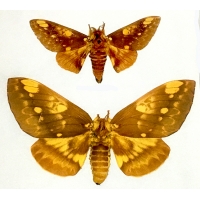
Bellavista Horned Devil Citheronia bellavista Central and South America.
A rare species, never before offered by WWB. A close relative of the Regal Silkmoth or Hickory Horned Devil Citheronia regalis.
The larvae feed on Sumac Rhus, Liquidambar and Prunus which includes Plum, Blackthorn, Portuguese Laurel and some Cherry species. Very likely other foodplants will be discovered. Larvae have much in common with C. regalis, in all stages, and large larvae have characteristic rose-pink spiney horns.
The pupae are formed underground and the adults emerge in the following year.
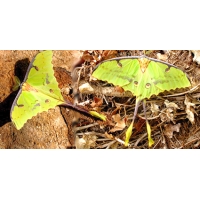
African Moon Moth Argema mimosae
Eggs will be sent to you by our breeder in Europe.
The larvae are most spectacular and they thrive on Eucalyptus, which is evergreen and therefore suitable for rearing in summer or winter. Other foodplants recorded: Liquidambar, Walnut, Sumac Rhus sp.
The moth is a miniature of the Giant Madagascan Moon Moth as a whole lot easier to breed! Spray the cocoons daily, keep at about 25 degrees C, or a little more, and they start to emerge as they do in the rainy season.
Pairings are not automatic but not difficult.

Indian Moon Moth Actias selene
This fine species has now become almost impossible to obtain! At last there are eggs again!
One of the most recommended for beginners and everyone's favourite. Huge, green, tailed moths. Enormous larvae with colourful tufts and tubercles. Changing from red, in early instars, to green. Young selene larvae are red and black, changing pattern with each skin change, until they become bright green with colourful tubercles. They become enormous, one of the largest larvae in the world!
Selene larvae appear to like Hawthorn over other foodplants , but they can also be reared on Apple, Osier Willow Salix viminalis, Plum, Blackthorn, Lime, Poplar and Sumac Rhus typhina. For later generations, when deciduous foodplants drop their leaves, selene larvae also thrive on Escallonia, Evergreen Oak and Rhododendron leaves and Portuguese Laurel Prunus lusitanica.
Keep in plastic boxes, changing the liner and food daily, until the larvae are large enough to be caged on cut foodplant. Selene larvae also do well sleeved outside in summer. Cocoons produce adult moths again in the same year, but the autumn generation pass the winter as a cocoon and emerge in spring.
Indian Moon Moth Actias selene
This fine species has now become almost impossible to obtain! At last there are eggs again!
One of the most recommended for beginners and everyone's favourite. Huge, green, tailed moths. Enormous larvae with colourful tufts and tubercles. Changing from red, in early instars, to green. Young selene larvae are red and black, changing pattern with each skin change, until they become bright green with colourful tubercles. They become enormous, one of the largest larvae in the world!
Selene larvae appear to like Hawthorn over other foodplants , but they can also be reared on Apple, Osier Willow Salix viminalis, Plum, Blackthorn, Lime, Poplar and Sumac Rhus typhina. For later generations, when deciduous foodplants drop their leaves, selene larvae also thrive on Escallonia, Evergreen Oak and Rhododendron leaves and Portuguese Laurel Prunus lusitanica.
Keep in plastic boxes, changing the liner and food daily, until the larvae are large enough to be caged on cut foodplant. Selene larvae also do well sleeved outside in summer. Cocoons produce adult moths again in the same year, but the autumn generation pass the winter as a cocoon and emerge in spring.
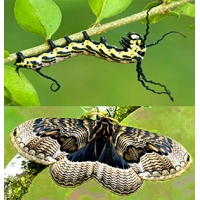
Asian Owl Moth Brahmaea tancrei
The larvae are decorated with long, knobbly and curling thoracic spines, which are shed in the final instar. They feed on Privet. The moth is marked with map-like contour lines, with large dark central areas.
Larvae become very active before pupating, they take on a different pre-pupating appearance and wander for some time. At this stage they escape very easily, so ensure the cage is secure. A base of compost or soil is required. The larvae don't burrow, but look for a flat surface under which to settle and pupate.
See the pictures to appreciate the interesting life history.
Highly recommended as a fascinating species to breed!
Asian Owl Moth Brahmaea tancrei
The larvae are decorated with long, knobbly and curling thoracic spines, which are shed in the final instar. They feed on Privet. The moth is marked with map-like contour lines, with large dark central areas.
Larvae become very active before pupating, they take on a different pre-pupating appearance and wander for some time. At this stage they escape very easily, so ensure the cage is secure. A base of compost or soil is required. The larvae don't burrow, but look for a flat surface under which to settle and pupate.
See the pictures to appreciate the interesting life history.
Highly recommended as a fascinating species to breed!

Squeaking Silkmoth Rhodinia fugax Far East 15 eggs
We are sure that Rhodinia fugax will bring a lot of pleasure to breeders, and happy memories to those who have reared the Squeaking Silkmoth before.
Large larvae squeak when touched or disturbed by noise. Even the pupa squeaks within the extraordinary cocoon, which is green and shaped like a pitcher plant, with an open top. The vessel would fill with water when it rains, but the caterpillar spins a drainage hole in the bottom!
Foodplants include Oak, Sycamore, Maples, Willows and Sallows, Osier, Beech, Hawthorn, and doubtless many other trees and shrubs. Younger larvae change colour at each skin change. Final instar larvae have a clearly defined lateral demarkation between a dark green underside and bright lime green topside, which breaks the recogniseable shape of the caterpillar and helps it to avoid detection by predators.
Moths emerge in autumn. Males are beautifully patterned in chestnut brown. Females are much larger, and patterned in yellow. Eggs laid in autumn remain unhatched until buds open in the spring. Store in a fridge or very cold place, slightly humid, but beware of mould. Don't keep them chilled longer than necessary. You should incubate the eggs as early as food is available in spring. March and April are the best months to incubate.