
SPRING and SUMMER PUPAE You can order these NOW in advance
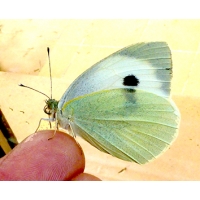
Large White Butterfly Pieris brassicae
TEN pupae £29.90 now on special offer £20.95
No longer the common butterfly it once was. Summer pupae may hibernate, especially if chilled, and some will emerge to give a further generation.
Winter pupae are stored cool and normally hatch in May, though some occasionally develop during winter if not cold enough.
This is a good species for the inexperienced, and as an introduction to rearing larvae.
The larvae feed on cabbage but also most Cruciferae which can be better and less smelly for captive rearing! Horseradish is ideal for its large leaves and other species include Nasturtium, Rape, Mustard, Sweet Rocket, Turnip and Watercress.
There are two or more generations in a year.
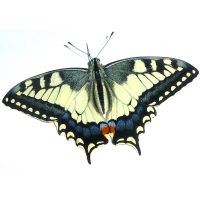
European Swallowtail Papilio machaon gorganus
Summer Swallowtail pupae produce adults in 2-4 weeks. A large and truly magnificent butterfly, as big as any in Europe.
Lay in the emerging cage on a base such as coir or greengrocer's imitation grass, that helps to maintain moisture.
The adults need nectar flowers and growing tender fronds of foodplant. In summer they also lay on the umbelliferous flowers of the foodplant.
The larvae are very easy to rear on Fennel, Carrot leaves and Parsnip leaves and flowers (wild and cultivated). One of the most attractive butterfly larvae and a joy to rear!

Eastern Festoon Allancastria cerisyi
Found in Eastern Europe into Asia Minor. This group finds itself between the Apollos and Swallowtails. The larvae feed on local Aristolochia species and will normally take Birthwort A. clematitis.
Becoming harder to obtain, these pupae overwinter in a cold place and will emerge usually in May when brought out to emerge.

Marsh Fritillary Eurydryas aurinia
The butterflies fly from May into June. Eggs are laid in large clusters on the underside of Devil’s Bit Scabious.The larvae Feed on Honeysuckle (wild is best), Snowberry or the natural foodplant Devil’s Bit Scabious. The larvae live in a tightly formed web, growing only a little before they hibernate in autumn.
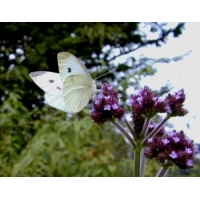
Small White Pieris rapae
Still a common butterfly but nonetheless interesting to rear.
Very easy to breed. Several generations are possible in a season. The pupa hibernates. Keep the pupae cool or in the fridge until April. Lay them out to emerge in May and provide the adults with nectar flowers and stems of the foodplant on which to lay.
The larvae feed on many species of cress, cabbage, mustard and other Cruciferae. This is a species you can breed to enhance the local countryside.

New Clouded Yellow Colias australis
Because of travel prohibition our normal breeders will not have stock this year. We are therefore hoping to source pupae from Europe. If it proves impossible, orders will be booked for supply in the summer of 2021.
Almost indistinguishable from the Pale Clouded Yellow hyale. This species was not recognised until 1947 when a Belgian entomologist, M. Berger, found that the larvae not only fed on Horseshoe Vetch Hippocrepis, but are totally different in appearance, having a brilliantly coloured pattern in black, yellow and green. Larvae will produce butterflies again this season. They will also feed on Crown Vetch Coronilla.
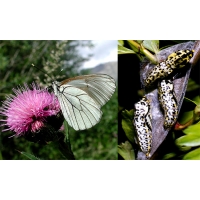
Black-veined White Aporia crataegi
Black-veined Whites lived in Britain until about 1911. Maybe one day they will live here again?
The pupae are very brightly coloured, angular, greenish white, with contrasting markings in black and yellow. Easy to hatch out. They lay clusters of bright yellow eggs. Resulting larvae spin a web and live in this while they develop, and eventually settle down there for the winter.
Larvae do well sleeved on Hawthorn (their preferred foodplant), Plum, Blackthorn, Plum or Apple. The larvae live in a cluster.
Summer larvae spin a very small and concealed web on the branch, in which they hibernate. Leave the sleeve untouched for the winter. In spring they awake as soon as the buds burst, and begin to grow very quickly.
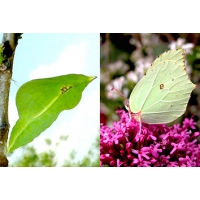
Brimstone Gonepteryx rhamni
The pupa is a remarkable and lovely shape. The butterflies hatch easily. Difficult to hibernate, but you can keep them for a while with fresh nectar flowers, and then release to hibernate and hopefully breed in your area.
Resulting pupae produce butterflies this summer. They hibernate amongst ivy (when closed, the wings resemble ivy leaf undersides). Because they are difficult to hibernate in captivity release the butterflies in summer sunshine, you may help to perpetuate the species to re-appear as one of the earliest and most prominent butterflies to be seen each spring in your area.
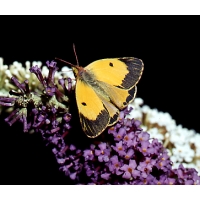
Clouded Yellow Butterfly Colias crocea
These pupae produce butterflies in a week or two at 18-20 degrees.
A great favourite with entomologists and extremely easy to rear on potted Clover. The larvae grow fast and will produce butterflies very quickly, particularly in warm conditions.
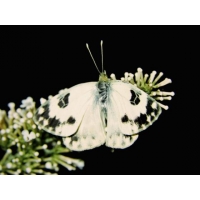
Bath White Pontia daplidice
The larvae feed on Mignonette, a flower of chalk soil, but they also feed on various Mustard family Cruciferae, and can be reared on the heads of Cauliflower. This is a very rare migrant to
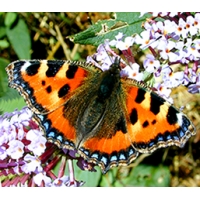
Small Tortoiseshell Aglais urticae
Suddenly this species has become scarce, in a very short time, though last season showed some recovery, there are very few to be seen this summer. The butterflies emerge in a little over two weeks, dependent on temperature.
The butterflies can be kept in a cage for a few days, with plenty of flowers for nectar, and then released to help the wild populations.
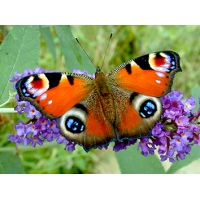
Peacock Butterfly (Inachis io)
One of Europe's most colourful and splendid butterflies. The pupae produce butterflies quite quickly. Keep in a netting emerging cage on a medium such as greengrocer's imitation grass, or foam sponge, which gives the adults a foothold on emergence, and drainage from misting that should be applied most days. Better still, suspend the pupae as described in the section on care of Exotic Pupae on this WWB website.
The butterflies can be kept for a few days in a cage with flowers for nectar, then released into the wild.
The larvae live only on Stinging Nettle: encourage some nettle patches in wild areas to provide breeding sites.
The mild winters waken hibernating butterflies at a time when there is no nectar and many Peacocks and Small Tortoiseshells perish, making them now quite scarce. You can help boost your local population by hatching and releasing these Peacock butterflies.